Insights for women · Success and safety
The Hidden Cost of "Having It All": Why Success Doesn't Always Feel Safe
And how to create success your nervous system can actually enjoy.
You did everything right. You climbed the ladder, earned the degree, built the business, raised the family, or did all of it at once. From the outside your life looks like the blueprint of success. So why does it still feel so hard?
You're supposed to feel proud. Accomplished. Settled. Instead you feel anxious, tense, braced, as if something is always just slightly off and you can't find what. You're not ungrateful and you're not broken. You're living with an invisible cost that a great many successful women carry and almost none of them talk about.
We call it success built on survival.
Why success can feel unsafe
Many high-achieving women grew up learning, long before they had words for it, that value equals performance. That love, approval, and even safety had to be earned. That being easy, helpful, or perfect got rewarded, and that rest, softness, or emotional expression did not.
A girl who learns that builds a particular kind of nervous system. Not a calm one that happens to achieve a lot. A hyper-functioning one, trained to scan for danger, stay ahead of judgment, and run on adrenaline. She succeeds, and she succeeds precisely because the alarm never turns off.
The problem is that success built this way feels fragile from the inside. It depends on never dropping a ball, never showing a weakness, never letting the guard down. Each achievement doesn't make her feel safer; it raises the height from which she could fall. So she can't relax. Her nervous system has never received the message that it's allowed to.
Signs you're living in survival mode
- You feel relief when the day ends, not satisfaction
- You can't celebrate a win without immediately scanning for the next thing
- You struggle to rest without guilt, and when you do rest, you don't feel restored
- Your body is often tense, wired, or numb, and you've stopped noticing which
- You feel lonely in a full room, and sometimes lonelier in a full room than an empty one
- Praise makes you uncomfortable. Criticism feels more familiar.
This isn't just burnout, though burnout is usually part of it. It's the cost of success without safety, and it's cumulative. Each year it goes unaddressed, the gap between how life looks and how it feels gets a little wider.
The patterns we see most
In our clinical work we describe eight stress patterns, and two show up over and over in women who've "made it" and don't feel it.
The Approval Seeker learned that worth has to be earned, over and over, and that it expires. For her, success is never a destination because the standard moves. Each achievement is briefly reassuring and then becomes the new floor.
The Guarded Controller learned that safety comes through certainty. For her, success is a fortress she has to keep defending. Being seen is risky, because being seen means being judged, and she has no evidence yet that judgment can go well.
Both women are extraordinarily good at what they do. Both are exhausted in a way that no vacation fixes. And both, in our experience, can learn something different, once the pattern has a name and the work goes to the level where the pattern lives.
What this looks like in the room
A woman we'll call Elena sold her company at forty-six. She came to see us eight months later because, as she put it, "I got everything I wanted and I've never felt worse." She wasn't sleeping. She was picking fights with her husband. She had started three new ventures and abandoned all of them.
What surfaced over the first weeks was that the sale had removed the one thing that had been regulating her nervous system since childhood: a problem to solve. Without it, the alarm had nowhere to go. We worked, slowly, on letting her body learn that it could be safe without a crisis to manage. Clinical hypnosis helped here, because the belief that "I'm only safe when I'm needed" was lodged somewhere conversation couldn't reach. She still starts companies. She no longer needs to.
Composite example. Details combined and changed; no individual is described.
What success with safety looks like
Success without survival mode is possible. We want to be careful not to oversell this: it is not fast, and it is not a mindset shift. It is a process of creating internal safety, teaching the body and the mind, over time, that worth and love and rest don't have to be earned, and that you can be seen without being in danger.
You don't have to give up your goals. Most women we work with keep every one of them. What changes is the relationship to the goal: from "I will be okay when I achieve this" to "I am okay, and I'd also like to achieve this." That's a different engine, and it runs on something other than fear.
Three ways to begin feeling safe in your success
- Celebrate with your body, not just your mind. Success is usually registered cognitively: target hit, goal met, box checked. Meanwhile the body is still holding the tension it used to get there. When you complete something meaningful, stop for two minutes. Hand on your heart or stomach. Say, silently or aloud, "It's safe to receive this." Notice whether the body agrees. If it doesn't yet, that's useful to know.
- Write on this question: "Do I feel safer struggling than succeeding?" This prompt unsettles people, which is why it works. Some women discover they believe that ease is laziness, or that success means being seen and being seen means being judged. You can't loosen a belief you haven't named. This is the naming.
- Ground yourself after wins, not just after losses. A surprising number of women find their nervous system gets more activated after something goes well, especially if they grew up unseen or criticized. Try a simple self-hypnosis phrase, repeated slowly with the eyes closed: "It's safe to be seen. It's safe to be successful. I don't have to shrink." Let the body absorb the moment instead of racing past it.
One honest question
If I stopped achieving tomorrow, what do I believe would happen to the way people see me?
Write the answer without editing it. Then ask whose voice that was.
Ambition without white knuckles
You don't have to give up your ambition. You just don't have to white-knuckle your way through it. Success doesn't have to feel like pressure. It can feel like peace, like alignment, like coming home to a place you built and are finally allowed to live in.
That's the kind of success we help women create. Not less of it. The kind their nervous system wants to stay in.
When it's time for more than a practice
The practices above open a door. They're less likely to be enough on their own if:
- You've achieved the thing you were sure would fix the feeling, and it didn't
- Rest, praise, or being cared for produces anxiety rather than relief
- Your relationships are paying for your success in ways you can see but can't seem to change
- You suspect the belief underneath goes back further than any job or goal
That suspicion is usually right. The belief that worth must be earned is laid down early, and the way through it isn't more insight. It's a guided, paced process for letting the nervous system learn something new, which is what we do, with two clinicians in the room and a small group of women who recognize each other on sight.
If something here landed, here's where it leads.
Three ways in, in order of how much you want to commit. Each one is complete on its own.
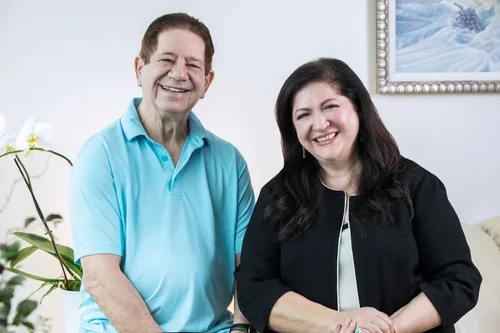
Dr. Robert Jaffe, PhD, LMFT, and Dr. Mitra Rashidian, PhD, LMFT are psychotherapists in Encino, California, who co-lead the women's work. Between them, more than sixty years of sitting with women who look fine from the outside.
This article is educational and reflects general clinical experience. It is not therapy, a diagnosis, or a treatment recommendation, and reading it does not establish a therapist-client relationship. Composite examples combine details from many people and identify no one. If you are in crisis, call 988 or 911.